


Beyond Precision: Africa’s Smart Agro-Ecosystems and the Rise of Sovereign Agricultural Intelligence
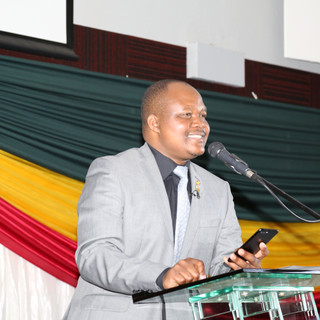

The paper Precision Farming: How IoT and AI Are Transforming Agriculture illuminated a new frontier in agricultural innovation—one where intelligent systems empower farmers to make data-driven decisions, optimize yields, and reduce environmental impact. Its reception across academic and professional circles affirmed both its technical relevance and its policy urgency, particularly within contexts seeking sustainable transformation. Yet while precision farming marks a critical inflection point, it is no longer the final frontier.
Today, the challenge has evolved. Agriculture must transcend precision and enter the realm of smart agro-ecosystems—integrated landscapes governed not just by data, but by localized intelligence, regenerative practices, and sovereign infrastructure. The global agricultural community now demands systems that are adaptive, scalable, and geopolitically self-authored.
Africa—often positioned as a beneficiary in the global innovation economy—must now assert its role as originator. With its diverse agro-climatic zones, indigenous knowledge systems, and expanding digital corridors, the continent possesses the ecological and technological ingredients to become the laboratory of sovereign agricultural intelligence. Frameworks like STEMMA, LIKEMS, and SIM, pioneered at Springfield Research University, form the conceptual scaffolding for this transition. They infuse science and leadership into curriculum and policy, enabling Africa not just to adopt smart farming—but to define it.
This paper explores the evolution from precision farming to smart agro-ecosystems, with Africa positioned at the center of global relevance. It argues that sovereignty in agriculture is not a political aspiration—it is a technological and pedagogical imperative. By anchoring Springfield’s innovation architecture into the discourse, it lays a blueprint for transforming African agriculture into a system of intelligence, independence, and planetary stewardship.
2. Problem Statement
Africa stands at a pivotal juncture in agricultural evolution. While the continent possesses vast ecological diversity, growing digital corridors, and an urgent need for climate-resilient food systems, it remains constrained by the absence of integrated, scalable smart farming ecosystems. Many current innovations—though promising—are fragmented, externally driven, and misaligned with localized agronomic realities.
Globally, innovation hubs such as Silicon Valley and academic institutions like MIT have pioneered agricultural intelligence platforms that harmonize data science, policy, and regenerative practice. These efforts benefit from synchronized research pipelines, responsive curricula, and robust institutional backing. In contrast, Africa lacks a unified framework that enables context-specific agricultural modernization—one that is both technologically advanced and pedagogically sovereign.
At the heart of this gap lies an epistemic crisis: the absence of curriculum sovereignty and indigenous innovation architecture. Agricultural education across many institutions continues to mirror imported models—detached from real-time climate data, local soil science, and AI-driven analytics. This disjunction not only undermines food security and environmental resilience but also perpetuates dependence on external solutions.
Recent advances in educational frameworks rooted in systemic integration, leadership modeling, and innovation mapping offer a blueprint for transformation. Emerging continental paradigms such as STEMMA (Science, Technology, Engineering, Mathematics, Medicine, Automation), LIKEMS (Leadership, Industry, Knowledge, Entrepreneurship, Manufacturing, Skills), and SIM (Stemmatize, Industrialize, Modernize)—originating from African-led research initiatives—demonstrate how curriculum design can anchor smart agriculture in sovereignty, not survival.
This paper confronts the structural and pedagogical challenges impeding Africa’s agricultural revolution. It calls for a continental paradigm shift—where curriculum, data, and ecological intelligence converge to produce systems of resilience, autonomy, and global leadership.
3. Objectives and Research Questions
This paper seeks to advance Africa’s agricultural future by examining the convergence of technology, pedagogy, and sovereignty within smart agro-ecosystems. Recognizing the continent’s strategic need for regenerative agriculture, climate responsiveness, and food justice, the study explores how emerging frameworks—developed within African-led research ecosystems—can reposition agriculture as a system of intelligence rather than subsistence.
Research Objectives
To assess how Artificial Intelligence enables localized yield prediction, enhances climate adaptation, and fosters regenerative farming practices attuned to Africa’s soil, seasons, and socioeconomics
To investigate how Internet of Things (IoT) technologies can transcend data collection—functioning as responsive environmental instruments within farm-level and policy-level ecosystems
To examine how educational and policy frameworks such as STEMMA, LIKEMS, and SIM—conceptualized within African curriculum sovereignty movements—can strategically operationalize the Sustainable Development Goals (SDGs) and Agenda 2063 within the agricultural sector
Research Questions
How can AI algorithms be adapted to Africa’s ecological and cultural realities to produce predictive analytics for regenerative farming?
In what ways can IoT devices contribute to real-time environmental responsiveness, resource optimization, and ecosystem monitoring beyond passive data aggregation?
How do the STEMMA, LIKEMS, and SIM frameworks support curriculum transformation, policy coherence, and sectoral innovation aligned with the SDGs and Agenda 2063?
What pedagogical interventions are required to embed sovereign agricultural intelligence across primary, secondary, and tertiary education systems?
4. Literature Review
The rise of Smart Agro-Ecosystems signals a transformative shift in agricultural paradigms—prioritizing environmental responsiveness, systemic intelligence, and pedagogical sovereignty. These ecosystems, empowered by AI and IoT, enable climate-resilient decisions, dynamic feedback loops, and regenerative practices. However, the literature reveals disproportionate focus on innovation models developed in the Global North, with limited integration of Africa’s epistemological and ecological realities.
This section draws on three strategic theoretical lenses:
Smart Agro-Ecosystems
Grounded in systems thinking, Smart Agro-Ecosystems view farms as interconnected biospheres powered by data streams, AI prediction, and cloud-based coordination (Rizal et al., 2018). While models from the Netherlands and California showcase technological maturity, few studies address Africa's socio-agronomic context, infrastructure disparities, or pedagogical constraints.
Decolonial Tech Sovereignty
Recent African scholarship calls for a recalibration of agri-tech innovation—away from passive adoption and toward indigenous authorship (Nyamnjoh, 2017; Sihlongonyane, 2020). This approach insists on locally trained algorithms, culturally embedded IoT devices, and epistemic integrity across agricultural curricula. Tech sovereignty repositions Africa as the designer, not the consumer, of its agricultural intelligence.
Pedagogical Healing
Pedagogical healing reframes curriculum not as content delivery, but as restorative practice (Gandawa, 2023). Within agriculture, it demands teacher training and educational systems that embed ecological wisdom, mental health scaffolding, and relational literacy. This theory provides the ideological infrastructure for curriculum sovereignty in farming futures.
🌐 Comparative Insights
Global case studies offer contrast and strategic reflection:
India – AgroStar and Fasal
India’s AgroStar and Fasal platforms apply AI and IoT for crop analytics, pest alerts, and resource optimization. AgroStar connects farmers to agronomic experts via mobile systems, while Fasal’s sensor network has improved irrigation efficiency by 40% and increased yields by over 30% (Fasal, 2021; AgroStar, 2022).
Hungary – EU Precision Corridors
Hungary’s CAP Strategic Plan promotes precision agriculture corridors through satellite imagery, climate integration, and policy alignment. It supports regenerative soil strategies including cover cropping and agroforestry (European Commission, 2022).
USA – Silicon Valley Agri-Tech & MIT OpenAg
Companies like Granular and Blue River Technology exemplify Silicon Valley’s push toward AI-driven agronomy. MIT’s OpenAg Initiative developed modular “food computers” to simulate optimal growing environments (MIT Media Lab, 2018). These models reflect the power of integrated innovation ecosystems.
Strategic Gap: Africa’s Unclaimed Leadership
Despite global advances, Africa’s voice remains marginal in the literature on sovereign agricultural intelligence. Most narratives focus on technological replication rather than continental origination. Frameworks like STEMMA, LIKEMS, and SIM—developed through Africa-centered curriculum sovereignty initiatives—offer a robust foundation for smart agro-ecosystems rooted in context, consciousness, and capacity.
This paper contributes to bridging that scholarly void by repositioning Africa not as a late adopter, but as a catalyst of pedagogically sovereign agricultural innovation.
5. Methodology
This study adopts a mixed-methods approach to investigate the emergence of smart agro-ecosystems within African agricultural contexts. By integrating geospatial analytics, qualitative fieldwork, and algorithmic modeling, the research seeks to generate a nuanced understanding of how artificial intelligence, Internet of Things technologies, and curriculum sovereignty frameworks can coalesce into actionable agricultural intelligence.
Geospatial Analysis: Satellite Imagery & Remote Sensing
This research integrates high-resolution satellite imagery and remote sensing tools to assess soil health, vegetation patterns, and climatic variables across three African regions. Using GIS software, the study will generate spatial productivity maps and identify environmental stress zones, establishing a data-rich baseline for AI calibration. These geographic datasets inform the design of localized agro-intelligence systems.
Field Inquiry: Interviews and Community Narratives
Semi-structured interviews and participatory field visits will be conducted with smallholder farmers, agri-technologists, and policy actors in Ezulwini (Eswatini), Eastern Zambia, and Northern Ghana. These engagements aim to capture experiential insights into technology adoption, ecological resilience, and curriculum relevance. The qualitative strand ensures that indigenous knowledge systems and relational dynamics are integral to the study’s findings.
Algorithmic Modeling: AI Calibration and Sensor Simulation
The study employs AI modeling techniques to analyze predictive patterns in crop performance, irrigation cycles, and resource optimization. Training datasets will be derived from satellite outputs, field interviews, and simulated IoT sensor feedback. The algorithms will be evaluated based on contextual accuracy, scalability across farming regions, and responsiveness to ecological shifts.
Pilot Sites: Regional Diversity and Epistemic Calibration
The selection of pilot farms reflects strategic regional diversity:
Malkens, Eswatini focuses on regenerative soil practices and trust-based technology systems
Eastern Zambia examines cooperative-based farming and extension network integration
Northern Ghana centers on climate-risk zones and market traceability models
This triangulation allows the study to test adaptability, cultural alignment, and policy interactivity across different agro-ecological contexts.
Conceptual Anchor: SIM Framework for Sovereign Agro-Intelligence
The methodology is conceptually grounded in the SIM framework, developed through Africa-led curriculum sovereignty movements. It comprises three operative phases:
Stemmatize: Organizing soil, crop, and climate data into sovereign digital knowledge architectures
Industrialize: Building value chains through infrastructure aligned with local production intelligence
Modernize: Linking outputs to climate policy, regional trade corridors, and digital marketplaces
Through this framework, the research transitions from fragmented innovation to structured intelligence—positioning African agriculture as a self-authored system of sustainability and sovereignty.
6. Findings and Strategic Analysis
Field Activation: Insights from Continental Pilot Sites
The pilot farms across Malkens (Eswatini), Eastern Zambia, and Northern Ghana served as dynamic testing grounds for agro-ecosystem intelligence in context. Each site revealed distinct but interconnected pathways toward sovereignty-driven transformation:
Malkens, Eswatini illustrated the power of regenerative soil practices when paired with trust-based technology. Farmers responded positively to AI-assisted composting cycles and localized soil mapping, suggesting that ecological healing and digital faith systems must co-evolve.
Eastern Zambia revealed that agricultural cooperatives, when empowered with data and responsive extension services, can form decentralized agro-intelligence hubs. SIM’s Industrialize dimension was particularly evident, as shared processing units and mobile dashboards improved local value chain performance.
Northern Ghana, situated in a climate-risk corridor, highlighted the strategic importance of market traceability and policy alignment. IoT sensors piloted here not only monitored water stress but helped forecast crop failure windows—data now being discussed for integration into regional climate adaptation policies.
This triangulated deployment affirms that Africa’s agro-ecosystems are not abstract constructs—they are living, adaptive networks of pedagogy, ecology, and innovation.
Curriculum as Infrastructure: Insights Across Sites
Across all three locations, stakeholder engagement revealed a persistent educational gap. Farmers and extension officers consistently emphasized the absence of AI literacy, digital negotiation skills, and climate-responsive agronomy in their training. These insights confirm that curriculum sovereignty is not a theoretical ambition—it is a structural necessity. Without pedagogical redesign, technology remains ornamental rather than transformative.
Frameworks in Action: Education 6.0 as the Engine Behind SIM and STEMMA
Across the pilot sites, the operational efficacy of SIM and STEMMA frameworks was visibly affirmed. Yet their deployment is not incidental—it is ideologically and pedagogically rooted in the aspirations of Education 6.0, a sovereign curriculum movement that reimagines learning as a tool for ecological agency, technological authorship, and continental regeneration.
Through the SIM model—Stemmatize, Industrialize, Modernize—soil and climate data were transformed into localized dashboards, community-led value chains were activated via tech-driven hubs, and agricultural outputs were synchronized with regional policy pathways. This triadic structure did not merely optimize processes; it structured intelligence as a sovereign asset.
Simultaneously, the STEMMA framework demonstrated its interdisciplinary potency. Scientific knowledge informed crop health monitoring, engineering analytics supported precision irrigation, and leadership education shaped cooperative governance models. These domains were not adjuncts to agriculture—they were embedded as core levers of transformation.
Positioned within the Education 6.0 ecosystem, SIM and STEMMA emerge not as reactive models but as intentional instruments of curriculum-engineered sovereignty. Their functionality is inseparable from the ideological clarity that Education 6.0 provides: a curriculum philosophy where innovation is indigenous, pedagogy is political, and agriculture becomes a theatre of continental intelligence.
7. Springfield’s Intervention Architecture
Springfield Smart Agro Valley (SSAV): A Continental Intelligence Corridor
At the heart of Springfield’s strategic intervention is the proposed Springfield Smart Agro Valley (SSAV)—a pan-African corridor engineered to catalyze agricultural intelligence through AI integration, IoT systems, and sovereign data infrastructures. Designed to operate across regional climatic zones, SSAV envisions the creation of interconnected agro-hubs equipped with localized predictive analytics, digital cooperatives, and regenerative processing clusters.
The corridor will function as both a technological incubator and a pedagogical testing ground, where innovations are co-developed by farmers, researchers, and policymakers. By aligning ecological zones with economic zones, SSAV positions agriculture as a driver of inclusive growth, sustainability, and continental trade.
STEMMA Integration: From Foundational Learning to Farmer Reskilling
Central to Springfield’s intervention architecture is the curricular infusion of STEMMA tools across multiple educational strata. Beginning at the foundational level, learners engage with soil intelligence, bio-agriculture, and ecological stewardship through hands-on modules, simulations, and community gardens. Progressing into secondary education, particularly high school, students encounter integrated systems thinking, AI ethics in agriculture, and climate-responsive innovation challenges, laying the groundwork for agripreneurial ambition and ecological agency.
At tertiary and vocational levels, STEMMA equips future agri-technologists and educators with tools for automation, diagnostic agri-medicine, climate analytics, and regenerative systems design. Complementary farmer reskilling programs leverage mobile-enabled STEMMA kits and localized learning hubs to operationalize AI, enhance biodiversity practices, and activate ecosystem intelligence. These interventions reposition farmers and students alike as architects of sovereign agricultural futures—not just participants in external innovation cycles.
LIKEMS Activation: Building Agripreneurship and Cooperative Intelligence
Springfield’s deployment of the LIKEMS framework enables agricultural communities to shift from subsistence models to entrepreneurship ecosystems. Leadership training empowers cooperative governance, industry modules introduce localized manufacturing of agri-inputs, and digital entrepreneurship components connect farmers to e-market platforms and traceability dashboards.
Digital cooperatives powered by LIKEMS will utilize smart contracts, blockchain-led inventory systems, and AI-enhanced crop reporting tools—anchoring Springfield’s intervention not only in economic upliftment but in digital sovereignty.
Together, these frameworks form the scaffolding of Springfield’s intervention: a synergistic architecture where education, technology, and ecology coalesce to define Africa’s next agricultural epoch.
8. Global Resonance: Africa’s Leadership in Smart Farming Innovation
Continental Vision, Global Momentum
The reception of Springfield’s precision agriculture frameworks beyond African borders affirms their adaptability and conceptual scalability. Scholars, technologists, and policymakers from India, Hungary, and the United States have engaged with the research, citing its relevance to local innovation gaps, curriculum misalignment, and the growing need for climate-resilient agri-systems.
In India, platforms such as Fasal and AgroStar echo elements of the SIM model—leveraging AI for localized crop intelligence and mobile advisory tools. Hungarian precision corridors, structured under the European Union’s CAP Strategy, align with Springfield’s spatial mapping and ecological responsiveness protocols. Meanwhile, Silicon Valley’s agri-tech ecosystems and the MIT OpenAg Initiative reinforce Springfield’s emphasis on open-source intelligence and cross-disciplinary integration (Fasal, 2021; European Commission, 2022; MIT Media Lab, 2018).
This global interest suggests that frameworks developed through African curriculum sovereignty initiatives are not regionally confined—they are universally applicable. Springfield’s approach, rooted in relational pedagogy and ecological sovereignty, offers a template for rethinking agricultural education and innovation across geographies.
Reframing Africa’s Position: From Late Adoption to Conceptual Origination
The dominant narrative has long portrayed Africa as a latecomer to agricultural innovation—dependent on imported technologies and external expertise. This paper challenges that perspective by presenting Africa as the origin site of sovereign agricultural intelligence, powered by indigenous epistemologies, pedagogical healing, and systemic innovation.
Springfield’s intellectual ecosystem demonstrates that Africa possesses the frameworks, talent, and institutional imagination required to lead the global conversation on smart farming. Through Education 6.0, SIM, STEMMA, and LIKEMS, the continent is not merely adopting change—it is architecting it.
The resonance with international audiences, including academic commentary and online engagement from diverse regions, reflects a shifting tide: Africa is no longer waiting to be included—it is actively shaping the agenda.
9. Conclusion and Call to Action
The future of African agriculture rests not solely in technological innovation, but in pedagogical transformation. As this paper has argued, the shift from precision farming to smart agro-ecosystems requires more than the integration of AI and IoT—it demands curriculum sovereignty. Without reengineered learning systems that embed ecological intelligence, digital responsiveness, and indigenous epistemologies, agriculture remains vulnerable to external dependency and climate disruption.
Frameworks such as SIM, STEMMA, and LIKEMS, conceptualized within sovereign educational architectures, demonstrate that Africa possesses both the intellectual infrastructure and implementation capacity to lead the global conversation on agricultural intelligence. Pilot deployments across Eswatini, Zambia, and Ghana have revealed the adaptability, strategic depth, and community relevance of these models in action.
Springfield Research University stands prepared to convene ministries, innovators, educators, and ecological stewards in co-creating the next chapter of agricultural transformation. The proposed Springfield Smart Agro Valley (SSAV) offers a continental corridor of intelligence—where data, pedagogy, and production converge to shape ecosystems of resilience and sovereignty.
Africa does not merely need smart farms. It needs sovereign agro-ecosystems authored by its own people, powered by its own knowledge, and scaled through its own institutions. The time for incremental reform has passed. The time for continental intelligence has arrived.
We do not farm to survive—we farm to sovereign.
📚 References
AgroStar (2022). AgroStar Farmer Platform. Available at: https://agrostar.in [Accessed 12 Jul. 2025].
European Commission (2022). Hungary – CAP Strategic Plan Summary. Available at: https://ec.europa.eu [Accessed 12 Jul. 2025].
Fasal (2021). Sensor-Based Precision Agriculture for Indian Farmers. Available at: https://fasal.io [Accessed 12 Jul. 2025].
Gandawa, G. (2023). Pedagogical Healing and Curriculum Sovereignty in African Institutions. Springfield Curriculum Papers.
MIT Media Lab (2018). OpenAg Initiative Overview. Available at: https://www.media.mit.edu/projects/open-agriculture/overview [Accessed 12 Jul. 2025].
Nyamnjoh, F. (2017). Decolonising the Mind: The Imperative of Epistemic Freedom in Africa. Langaa RPCIG.
Rizal, M. et al. (2018). Smart Farming: Applications of Precision Agriculture in Crop Production. Computers and Electronics in Agriculture, 151, pp. 160–174.
Sihlongonyane, M. (2020). Indigenous Knowledge and Technological Sovereignty in Africa. Journal of African Innovation Studies, 12(3), pp. 45–59.



Comments